




By Guy Page
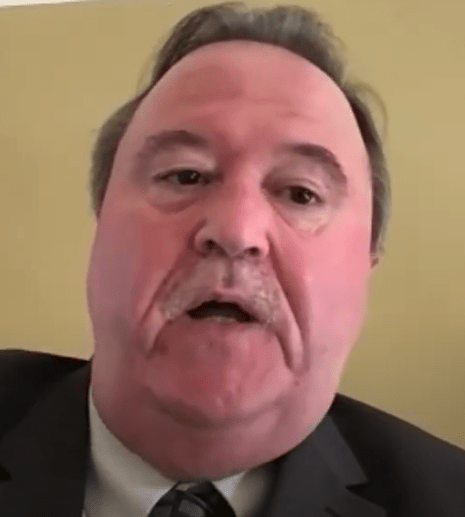
After learning that plans to upgrade Vermont’s power grid could cost $2.2 billion, Sen. Russ Ingalls (R-Essex/Orleans) asked Vermont power experts Thursday: who pays?
The upgrades necessary to double the amount of electricity the Vermont power grid can deliver will cost $2.2 billion over the next 28 years, according to a memo by Vermont Public Power Supply official Melissa Bailey to a House committee. In the Senate Transportation Committee yesterday, Sen. Ingalls put the question to Vermont’s power grid leaders:
“What’s the impact going to be to the ratepayers that we see when we see a big number like this?”
Ingalls represents 44 towns in the Northeast Kingdom counties of Essex and Orleans. Compared to the rest of Vermont, the homes there are older and so are the people living in them. He told the committee he doesn’t want his constituents to get “left behind” by electricity rate hikes required to pay for the upgrades.
The grid upgrade was being discussed in Senate Transportation in part because the state and federal government is seeking major upgrades in electric car chargers – including those located in the home.
“My direct response to your question, Senator, is that this represents a once in a lifetime opportunity, if we challeng ourselves to be creative and to not think small, given this is the one time we might get federal dollars to buy down the cost of work we know we need to do,” Kerrick Johnson, Chief Innovation Officer of Vermont Electric Company (VELCO) said.
“That’s not normally stuff you’d see on one bill, at one time, for one short period of time,” Johnson said. “This is like 20 years or so of investments over time that would normally take place over time and could be absorbed. This is all focused, aggregated, in one big ask in the hope that the federal dollars could advance that vision.”
In particular, VELCO wants to spend a chunk of the hoped-for federal money to fix the vexing problem of “curtailed” northern Vermont wind turbines, VELCO Transmission Manager Hantz Presume said. When spinning at or near full speed, the turbines make too much power for the current grid to handle. To prevent system overloads, their output must be “curtailed.” Most of those upgrades would take place between Highgate and the Burlington area.
Rebecca Towne is the manager of Vermont Electric Co-op, which serves the state’s most rural areas.
“I would echo Carrick’s point – some of this is about investments we were planning to make anyway,” Towne told Ingalls. “But we’re trying to accelerate them. That does have some cost pressure on rates. Federal funding can offset that cost pressure on rates. Some of what you see wouldn’t be borne by rate payers.” she said.
Vermont Electric Co-op (VEC) wants federal money to move and improve power distribution systems to reduce outages and increase capacity. It also wants $$ to invest in ‘vegetation management’ – i.e. fight the emerald ash borer infestation that is likely to destroy many of the trees around VEC power lines. And, because it needs workers to make all of this happen, VEC wants funding to build its apprentice program.
Because the plan would span 28 years and involves unknown amounts of federal spending, it’s impossible to project a specific Vermont electricity rate hike. Neither Johnson nor Towne offered one. Ingalls asked the committee to ask the Vermont Public Utilities Commission to examine the $2.2 billion proposal for rate estimates and potential savings.
Threat of rolling blackouts discussed
Sen. Thomas Chittenden (D-Chittenden) asked about the threat of rolling blackouts – a warning issued recently by regional grid operator ISO-New England – as Vermont increases its use of electricity. As Vermonters become more dependent on electricity alone to stay warm, keep the lights and appliances on, and get to and from work, what steps are the state’s power planners taking to reduce the likelihood and impact of blackouts?


“There is a set of extreme circumstances that all have to line up for this to be an issue in the first place. Let’s make that clear,” Johnson said. “But if it does happen that is an impactful event. Thankfully there’s been a whole lot of work that has been done.”
The ISO-New England announcement “led to some additional conversations – [Public Service Dept.] Commissioner June Tierney convened a great discussion. There are planning drills that are run. There is incredible collaboration. I think you’d say it’s led by VELCO but all the distribution utilities participate in very various ways, in a breadth and a depth of exchange of information I have never seen before.
“If that [blackout conditions] starts to happen, we’ll have a long lead time. The utilities know exactly how to interact with each other. There’s drills every week that describe exactly how that would go. There’s communication that would be practiced so your constituents, yourselves, all the various stakeholders would have ample notice. It wouldn’t be something where we just throw a switch. There’d be gradations. This is starting to emerge as a concern,” he said.